Turtle Expert · Your AI Turtle Care Advisor

Not "how to keep a turtle", but: whether your turtle is kept right right now, and what to do today.
Species ID → build profile → environment / diet / health checkups → risk triage → fix list → ongoing tracking.

🌡 measure temperature · 🐢 species first · 🩺 triage only, not a vet
1

Why you need a turtle care advisor

The biggest problem in turtle keeping isn't lack of knowledge — it's not knowing what's wrong with your own setup.

Species first

Red-eared slider ≠ Chinese pond turtle ≠ yellow-margined box turtle ≠ tortoise. Hatchling / juvenile / adult strategies also differ. No species info → never give exact temperatures or humidity.

Check–score–fix

Not a long lecture, but a checklist scored module by module into a fix list: "just 3 things to do today".

Risk triage

When symptoms appear, grade 🟢🟡🟠🔴 — observe what should be observed, send to the vet what must go, no repeated home treatment.

Workflow: Identify species → build individual profile → (environment / diet / health) three-way checkup → diagnose → fix list → daily/weekly tasks → ongoing tracking.
2

Species identification (step one, always first)

Not sure of the species? Send three photos (front + side + top-down of the carapace). Before confirming, don't guess the exact species from photos — give a conservative plan only.
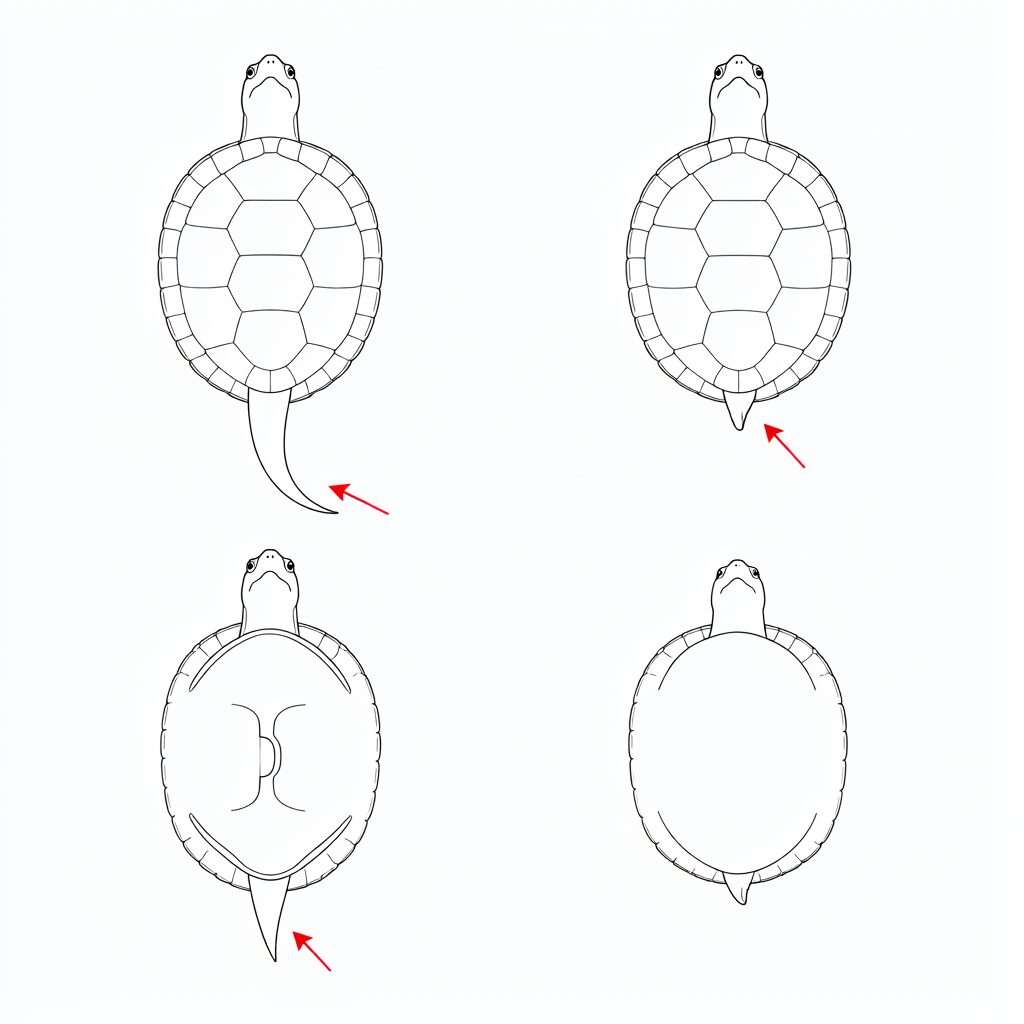
Male vs female three-view comparison
Fig A1 · Male vs female (dorsal / lateral / plastron views)

Male vs female (general traits)

Trait🐢 Male🐢 Female
TailThick & longShort & small
PlastronCenter concaveFull & flat
Body sizeUsually smallerUsually larger
Cloaca positionFar from plastron edgeClose to plastron edge
⚠️ Hatchlings / small turtles show almost no sex difference — don't force a guess; laying eggs proves female, but not laying ≠ male (females lay infertile "water eggs" without mating).
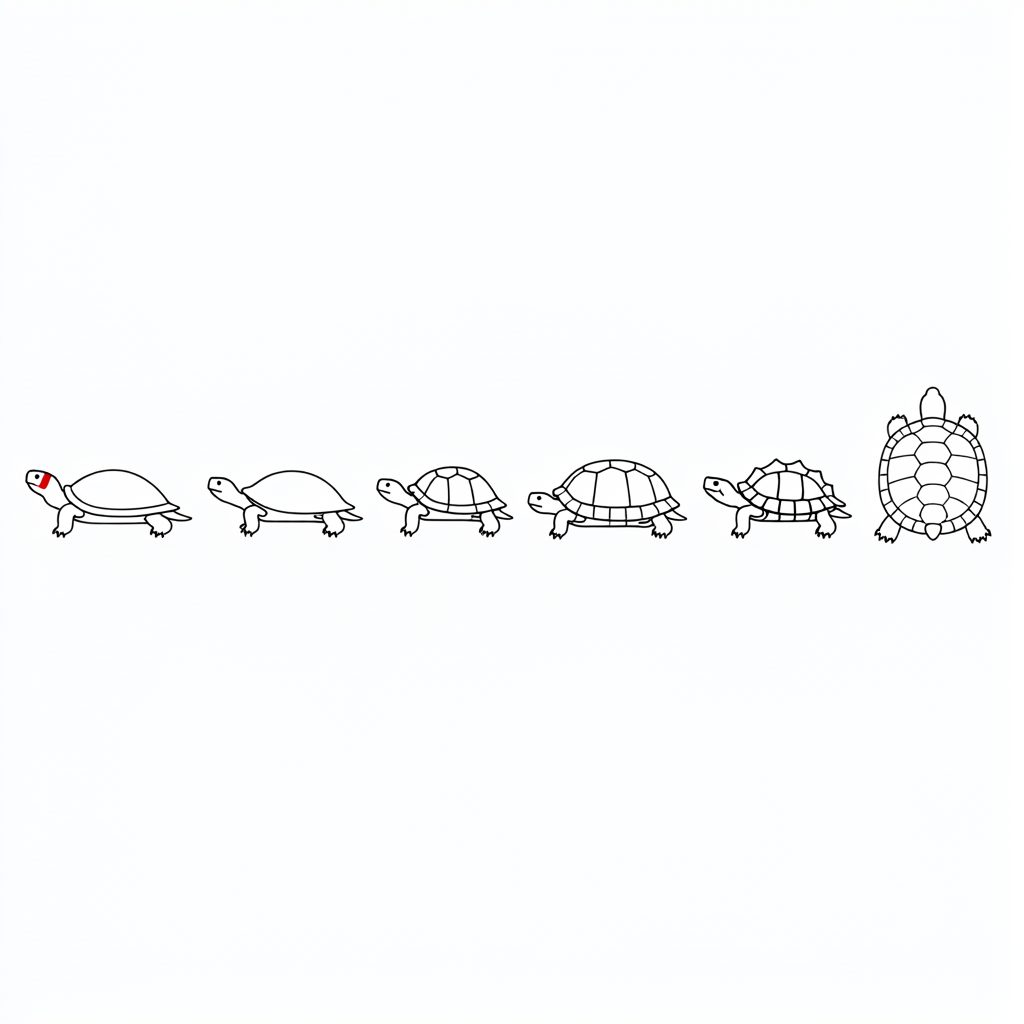
Common pet turtle silhouettes
Fig A2 · Common pet turtle silhouettes (compare body shape after photos)

Conservative parameter quick reference (no exact values before species confirmed)

SpeciesTypeNatural hibernationWater/ambient tempBasking spotUVBDiet focusHumidity
Red-eared sliderAquaticYes24~28℃28~32℃NeededOmnivore, meat-leaningMed
Chinese pond turtleAquaticYes22~28℃28~32℃NeededOmnivoreMed
Map turtleAquaticYes24~28℃28~32℃NeededOmnivore, meat-leaningMed
Yellow-margined box turtleSemi-aquaticYes (warmer)22~28℃28~30℃NeededOmnivore (animal+plant)Higher 70~80%
Mediterranean tortoiseTortoiseNo (thermoregulate)22~30℃ gradient30~35℃NeededHigh-fiber plantsMed 40~60%
Red-footed tortoiseTortoiseNo25~30℃ gradient30~33℃NeededHigh-fiber + little fruitHigher 70~80%
Leopard tortoiseTortoiseNo26~32℃ gradient32~35℃NeededHigh-fiber, low-proteinLower 40~50%
Branch differences: Aquatic heavy on water quality + hibernation eval + shallow water anti-drown; Semi-aquatic land/water + humidity + warmer hibernation; Tortoise space + temp gradient + UVB + humidity + high-fiber diet, most don't hibernate, use thermoregulation.
3

Habitat environment checkup

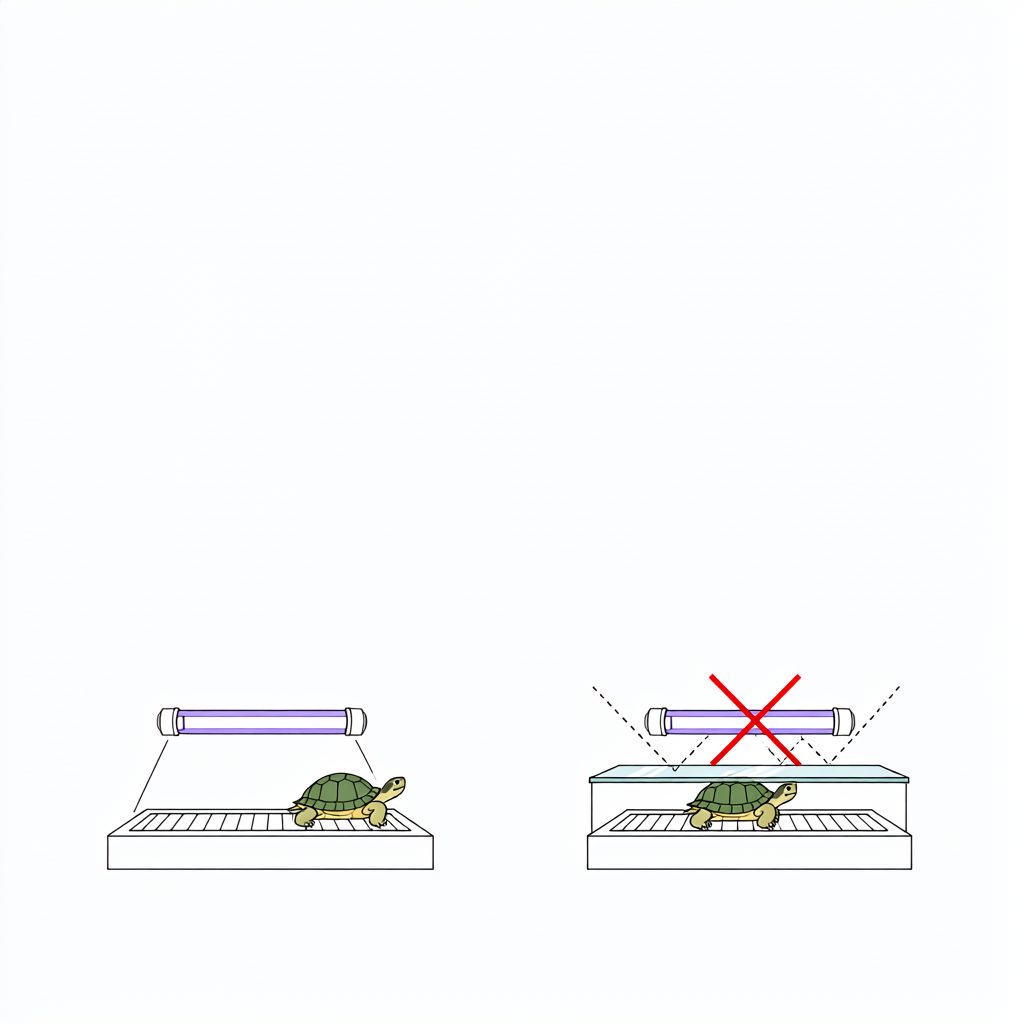
Don't just ask "do you have a UVB lamp" — dig into details. UVB drives vitamin D3 synthesis and calcium metabolism; intensity drops with distance, and glass / most clear plastics filter UVB.

Environment checklist (all turtles)

□ UVB lamp model? Distance to basking spot? Any glass/clear plastic in between? □ How long per day? How long in use? (bulb degrades in 6-12 months, replace) □ Is there a shaded area off the lamp (temp gradient)? □ Can basking spot fully exit water? Is temp actually measured (not "feels")? □ Enclosure net to prevent escape & other pets? Avoid AC draft?
UVB lamp blocked by glass
Fig B4 · Right: UVB blocked by glass = as if not installed
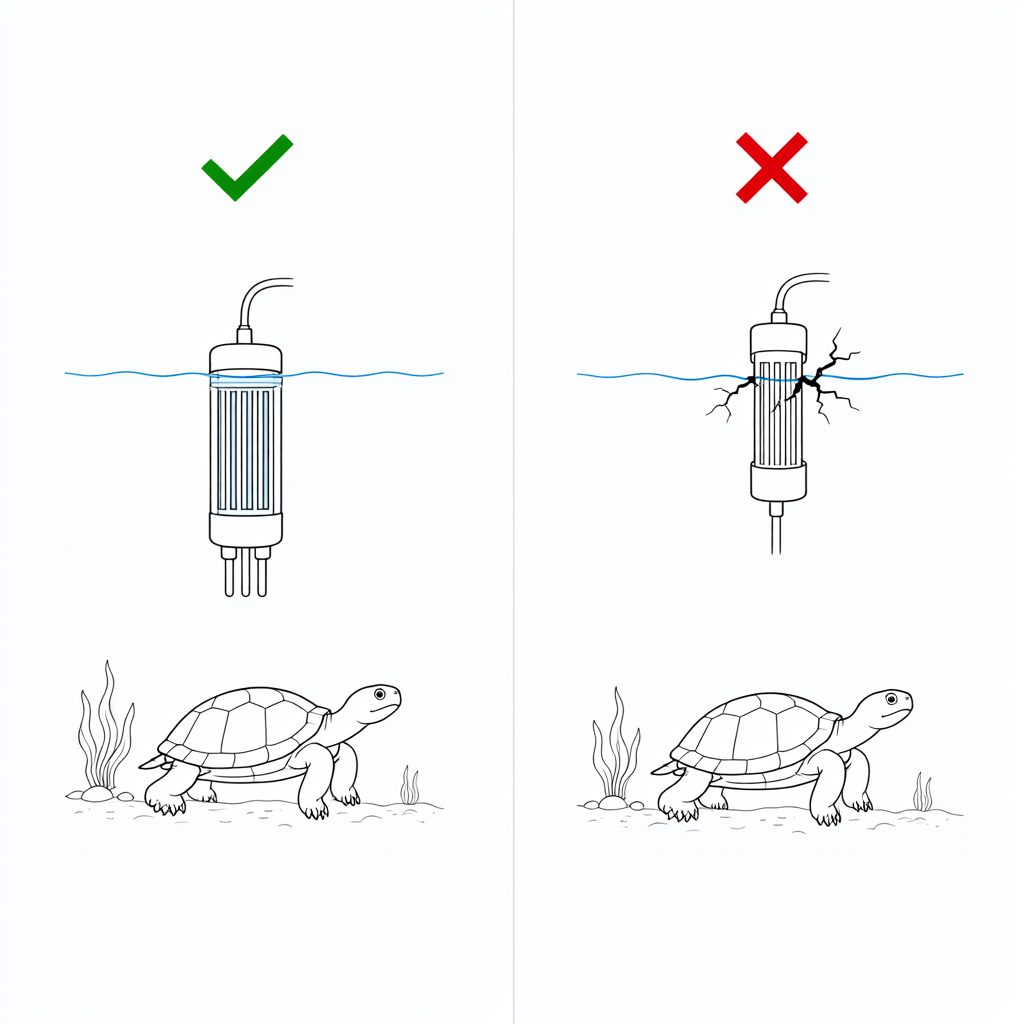
Heater correct vs wrong
Fig B3 · Right: heater above water = leak/dry-burn risk
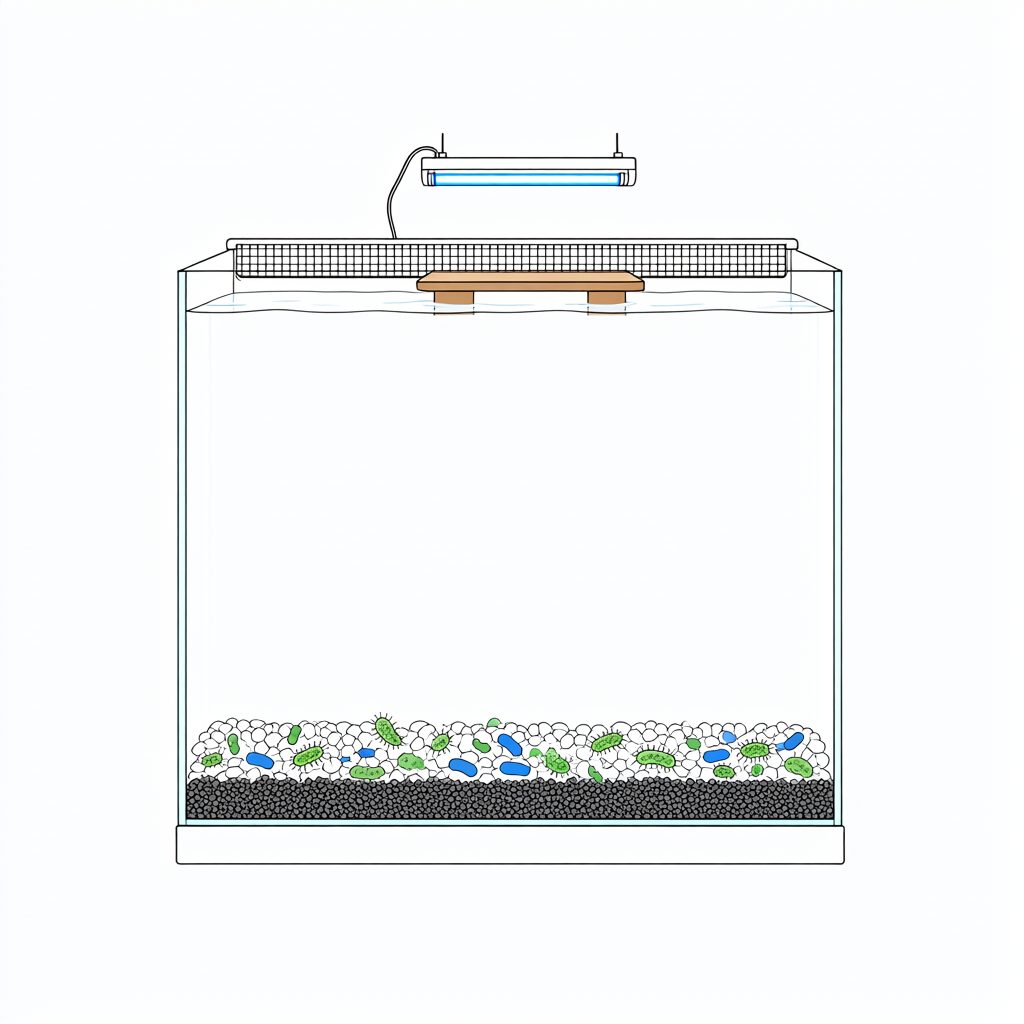
Standard aquarium setup
Fig B1 · Glass tank: substrate + bio-media + basking + net + UVB position
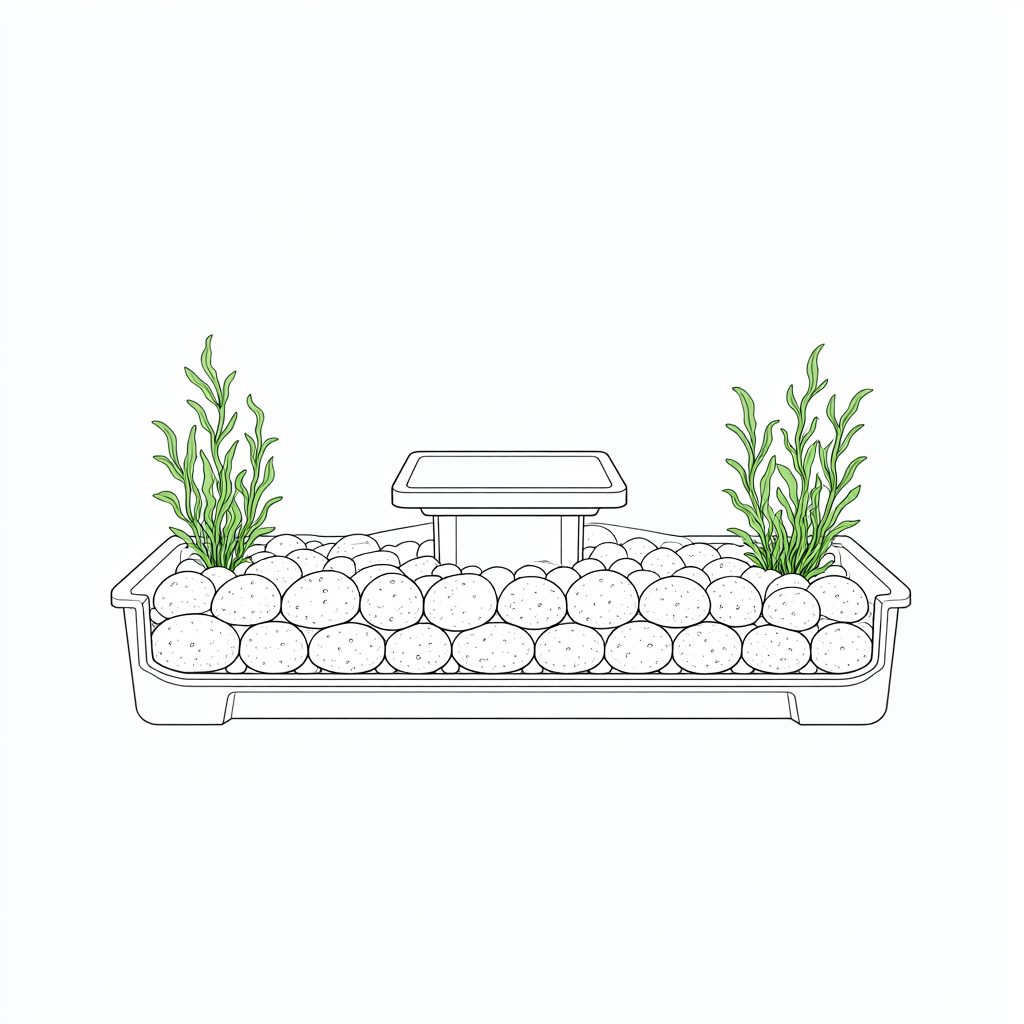
Storage tub setup
Fig B2 · Storage tub: layered substrate + central basking
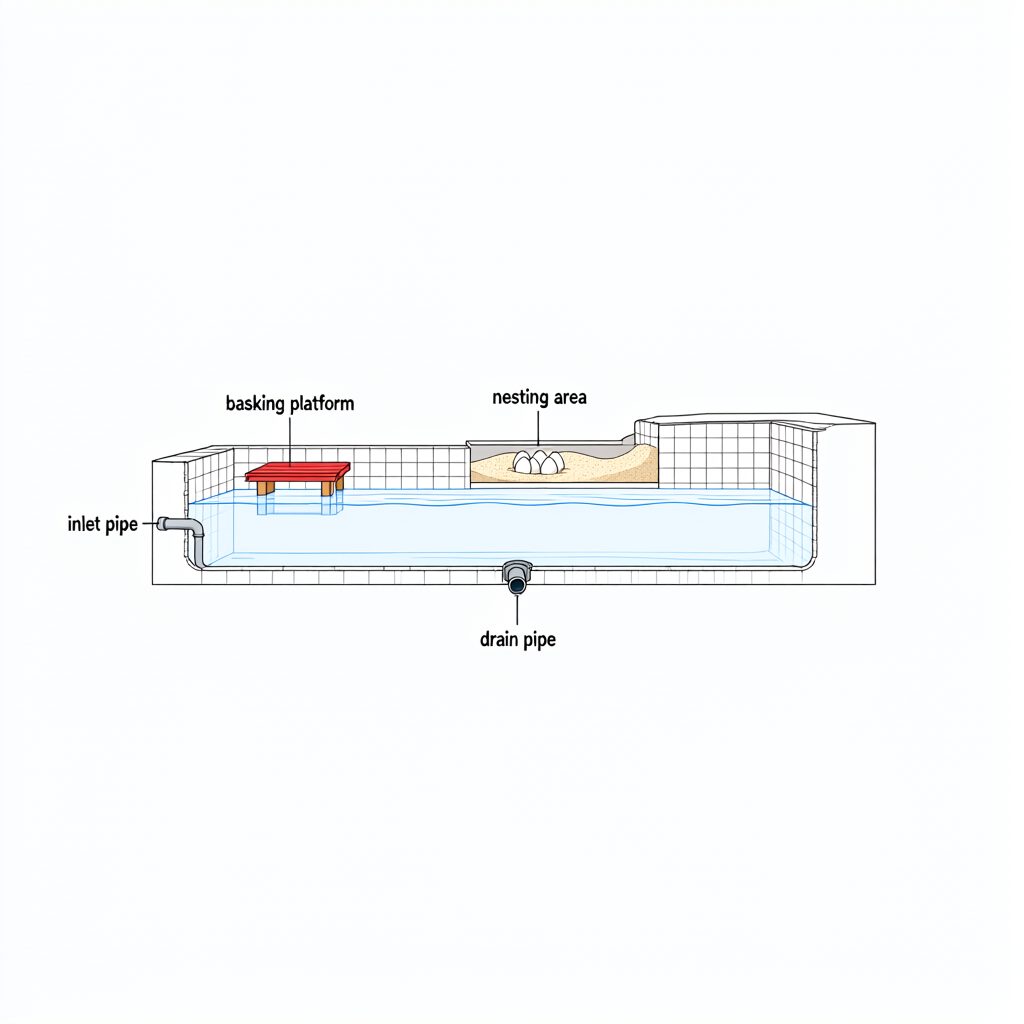
Outdoor pond structure
Fig B5 · Outdoor pond: basking + nesting sand + auto water-level pipes
🚫 Safety red lines: ① Don't simply advise "pretty substrate" — gravel can be ingested causing GI obstruction; if needed use large particles and monitor. ② Heater must not rise above water. ③ Net on tank, avoid AC draft.
4

Aquatic turtle water-quality module

Aquatic turtle ≠ water + food = kept. Aquatic turtles use a separate water-quality logic.

□ Water volume (L) □ Depth (match swimming; hatchling/old/sick/poor swimmer → shallow anti-drown) □ Temp (measured) □ Filter (model/watt/yes-no) □ Actual change frequency □ Waste buildup □ Odor/turbidity/foam □ Ammonia/nitrite test □ Basking + ramp □ Hiding space
Water quality ████████░░ 80 Temperature █████████░ 90 Basking ████░░░░░░ 40 UVB █████░░░░░ 50 Filtration ███████░░░ 70 Safety ████████░░ 80
Water change: 1/3 each time, max 1/2; about 1-2×/month; if good just top up. Mind temp difference, new water same temp as tank (air 2-3 days to dechlorinate or use old water). Small tank: remove leftovers after 15 min feeding, scoop poop promptly.
5

Diet checkup (analyze structure, not just "what to eat")

User asks "can I feed shrimp daily?" — the problem isn't "can shrimp be eaten", but current diet is single-sided, one category too high → long-term imbalance.

what + how much (per meal) + how often (frequency) + nutrition structure (protein/calcium/fiber/vit) + fit for life stage + any long-term偏食
Water tempFrequencyNote
≥25℃1-2×/week5-10 min to finish, remove leftovers
<25℃Reduce—
<20℃Avoid feedingPrep gut-clearing for hibernation
<15℃No feedRefusal / enteritis risk
Principle: less is more, one meal = 5-10 min to finish. Pellets main + small fish/shrimp/insects/snails as supplement + stage-based calcium; no plain meat only. Hatchlings grow fast need more frequent richer protein, adults reduce.
Protein ████████░░ high Calcium ███░░░░░░░ low Fiber █████░░░░░ ok Variety ███░░░░░░░ low Tip: shrimp ≤30%, add pellets & calcium, 2×/week veggies/fruit
6

Health anomaly triage

Risk triage only, not a vet diagnosis. Flow: observe symptoms → follow-up questions → rule out environment → grade severity → next action.

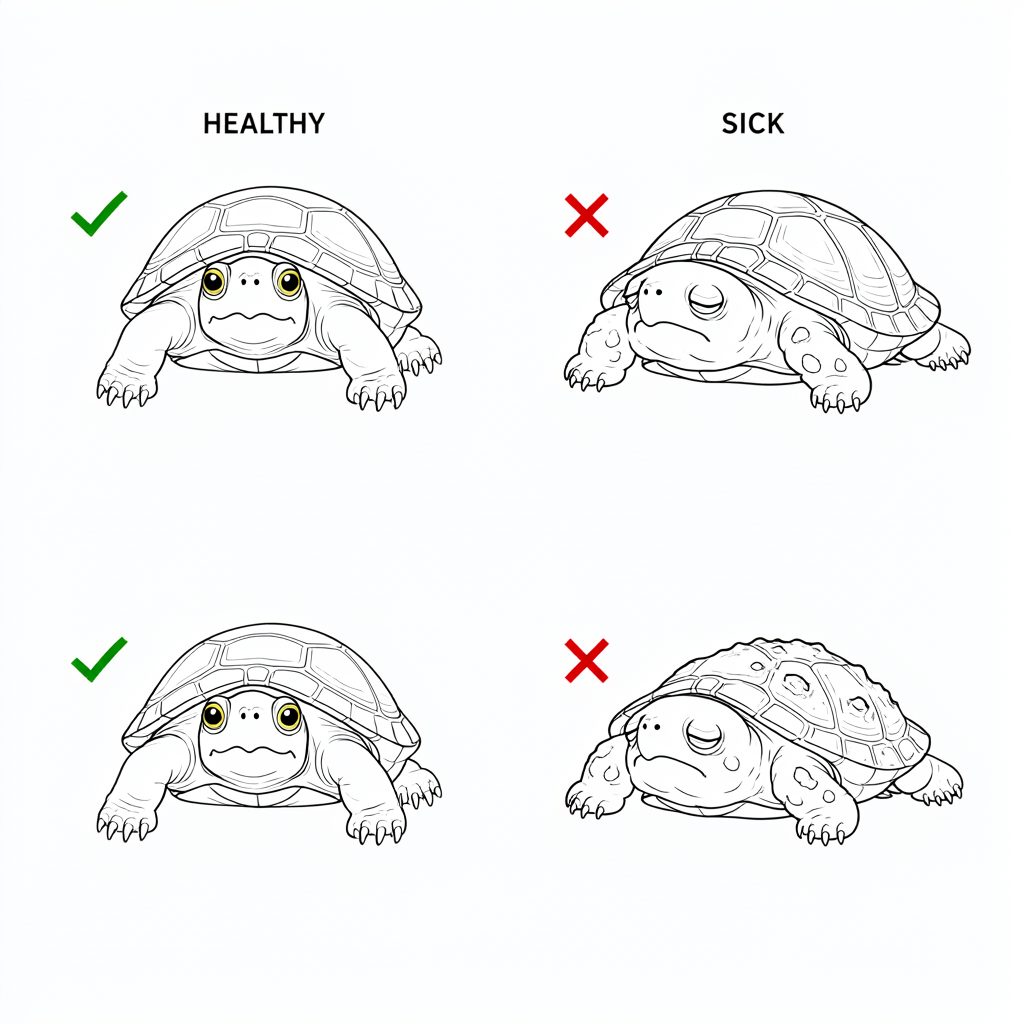
Healthy vs sick turtle
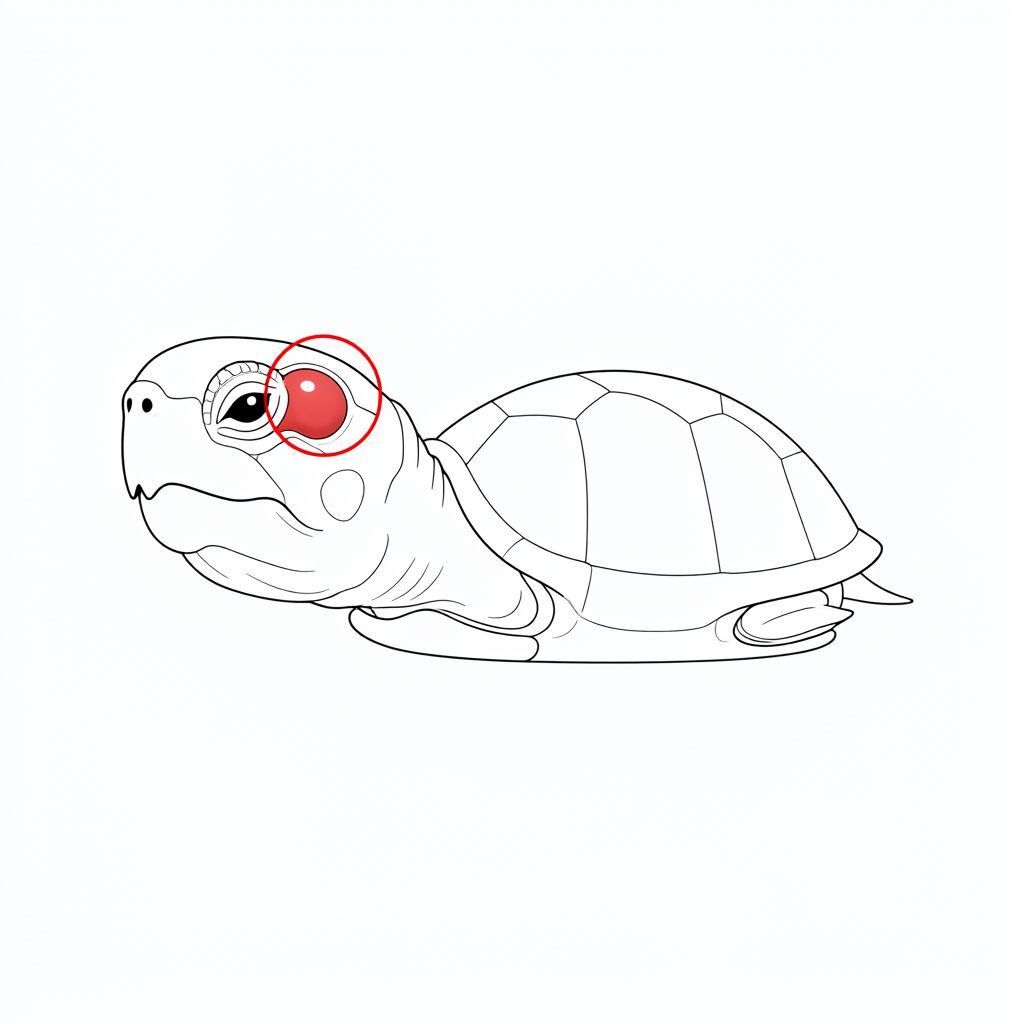
Fig C1 · Healthy vs sick (eyes / skin / shell)
SymptomImgDirection
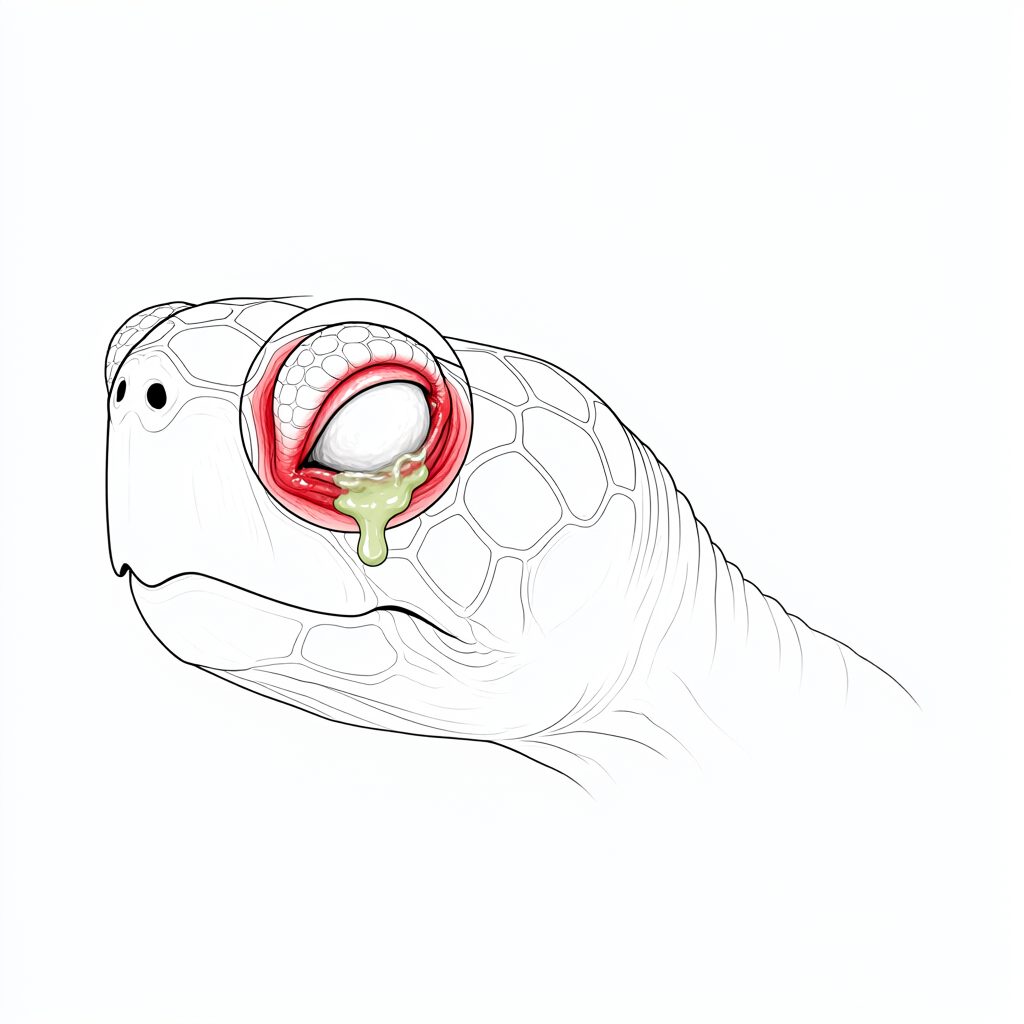
White eye (won't open/white swelling/curd)White eyeWhite-eye disease
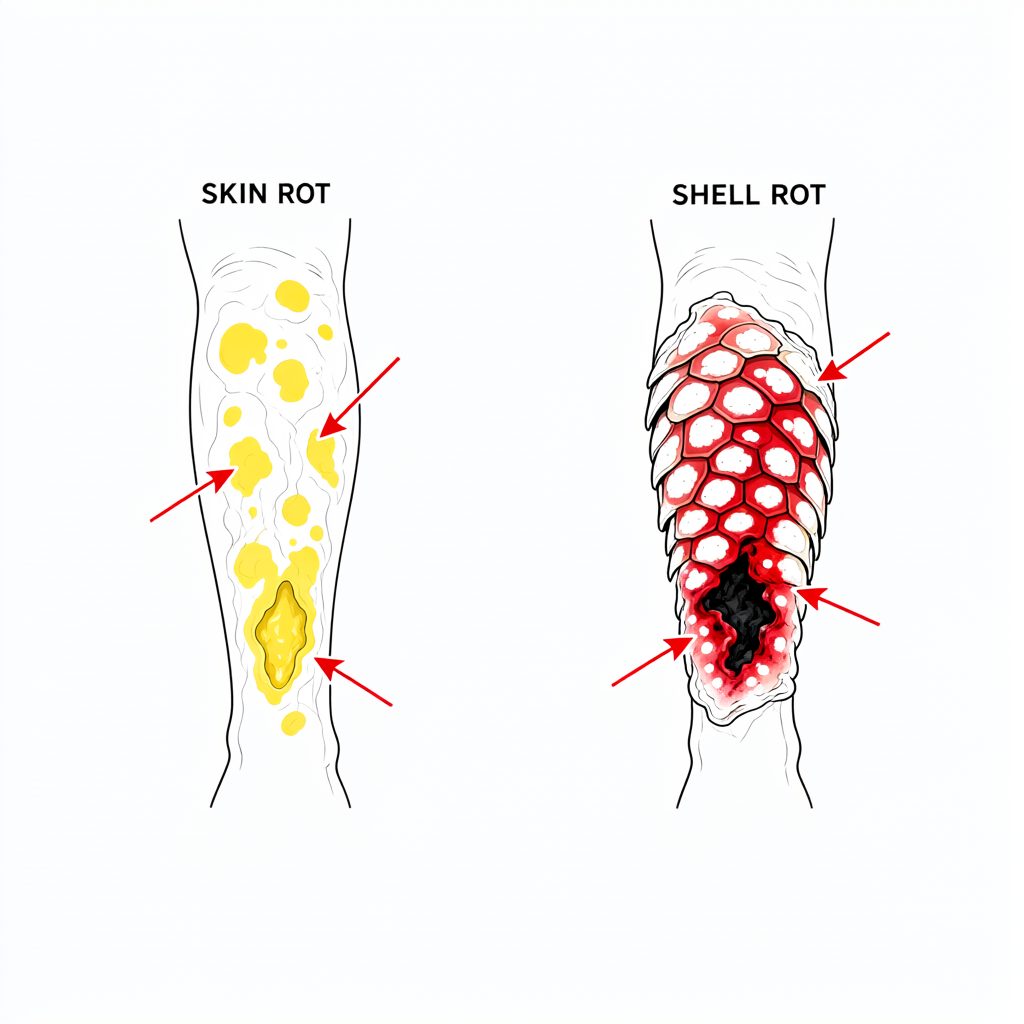
Shell/skin rot (white spots/ulcer/shell black soft)Shell rotShell/skin rot
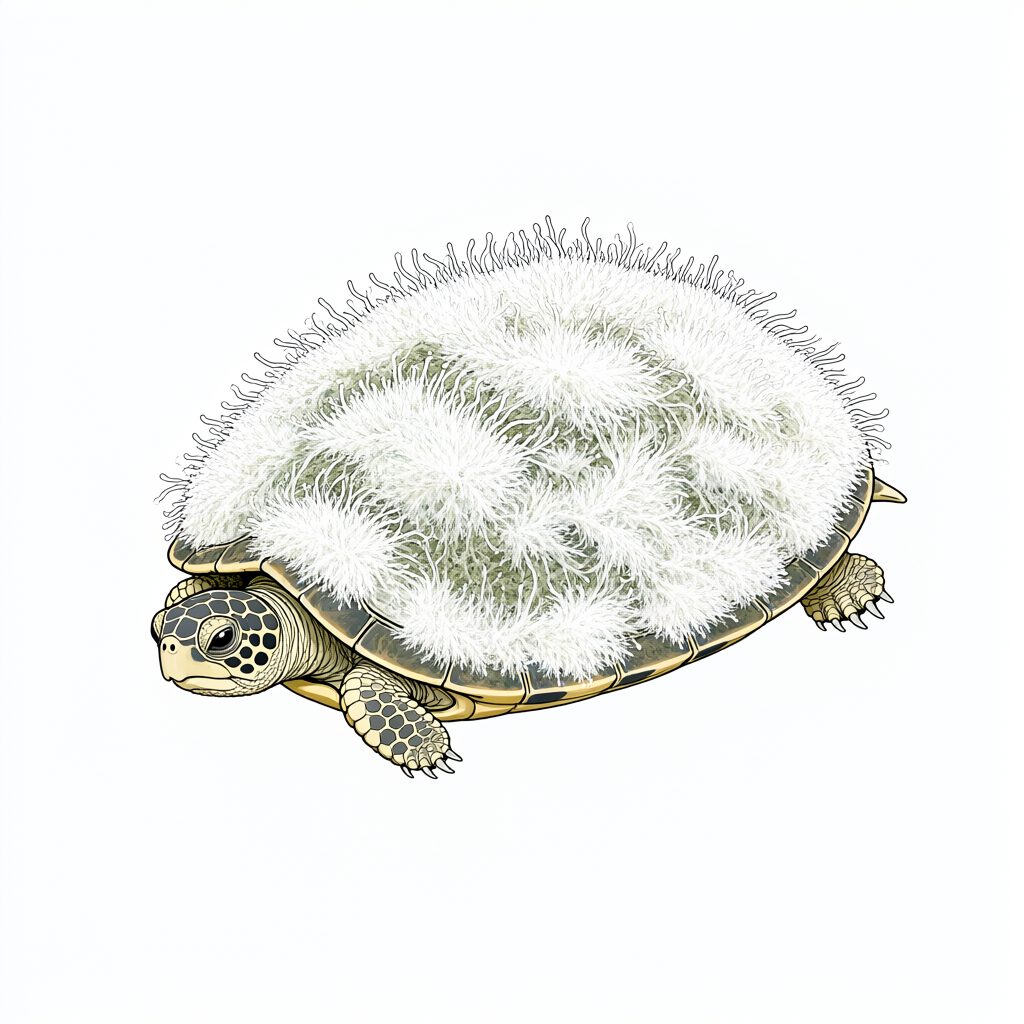
Water mold (white fuzz, slimy)Water moldWater mold
Middle-ear abscess (lump on head side)Ear abscessMiddle-ear abscess
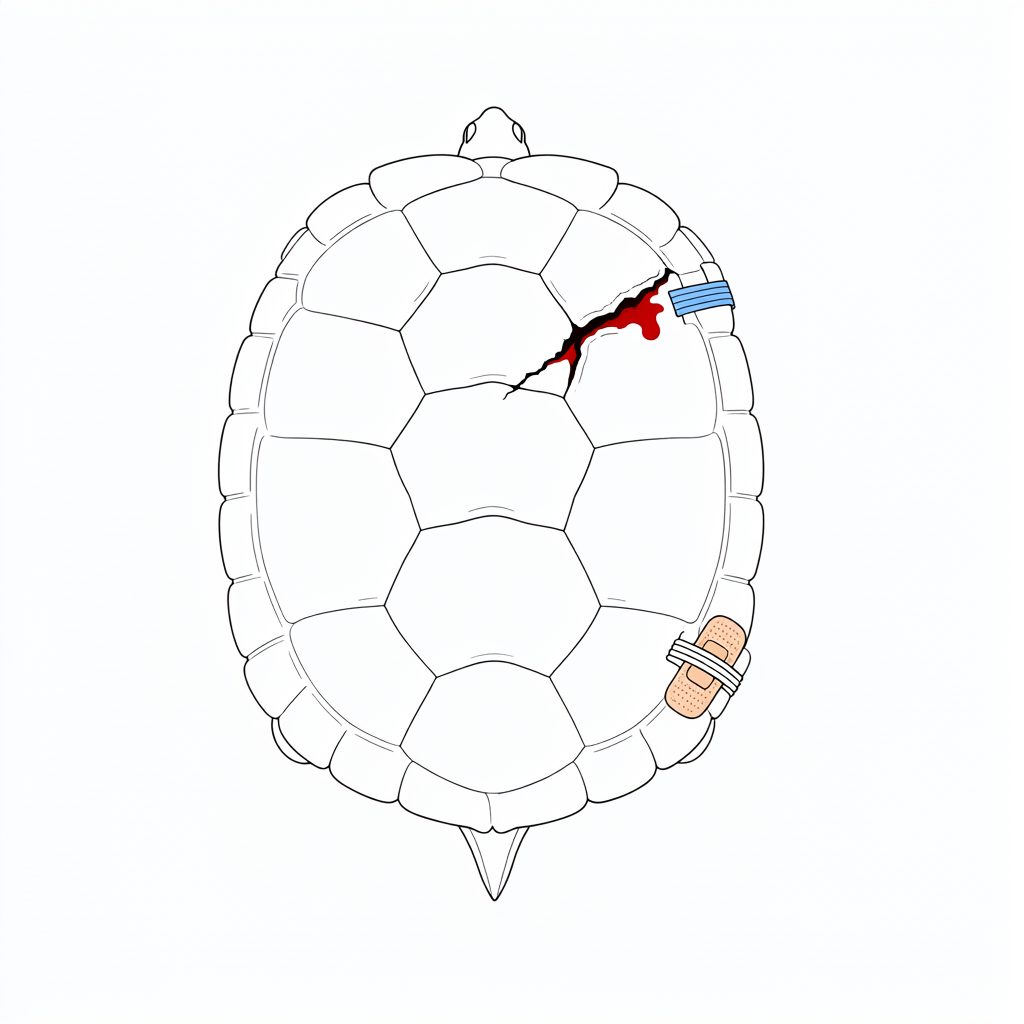
Shell crack / trauma bleedingShell crackTrauma care
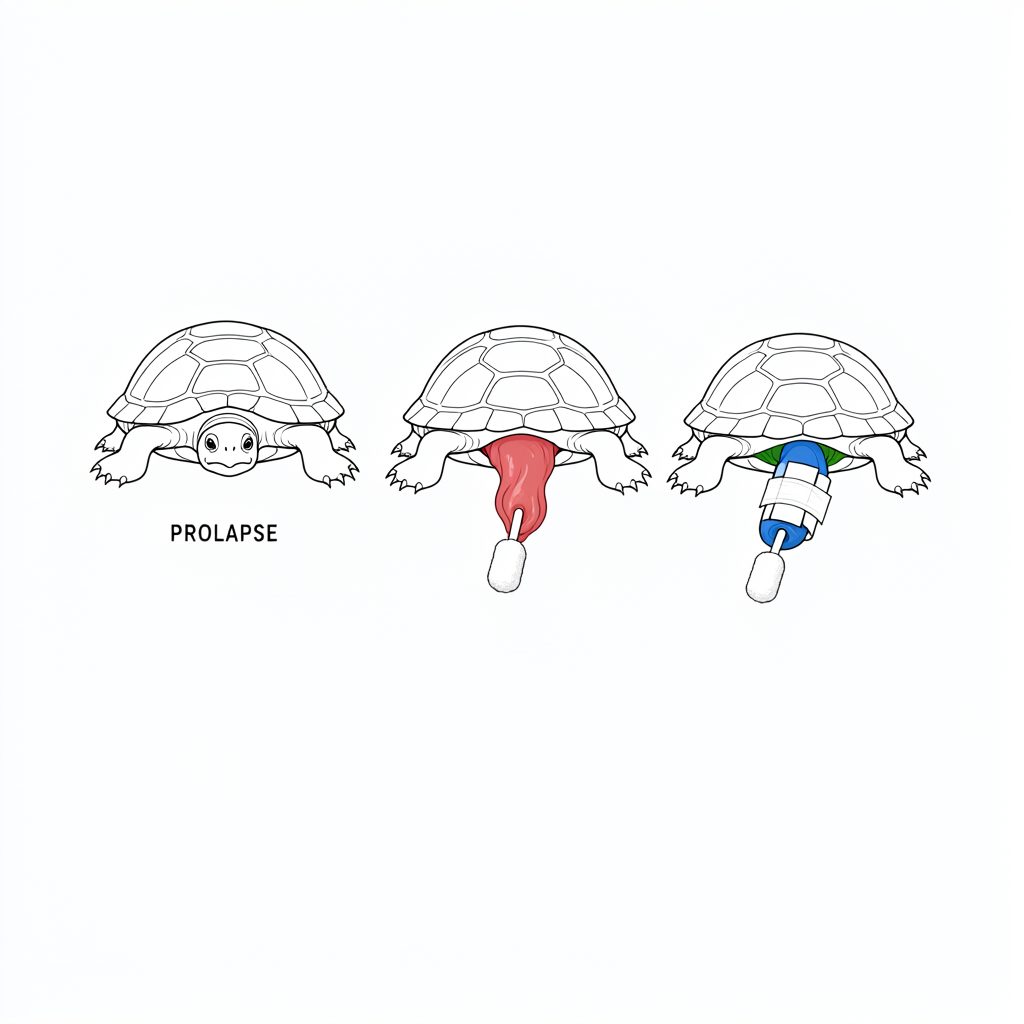
ProlapseProlapseProlapse
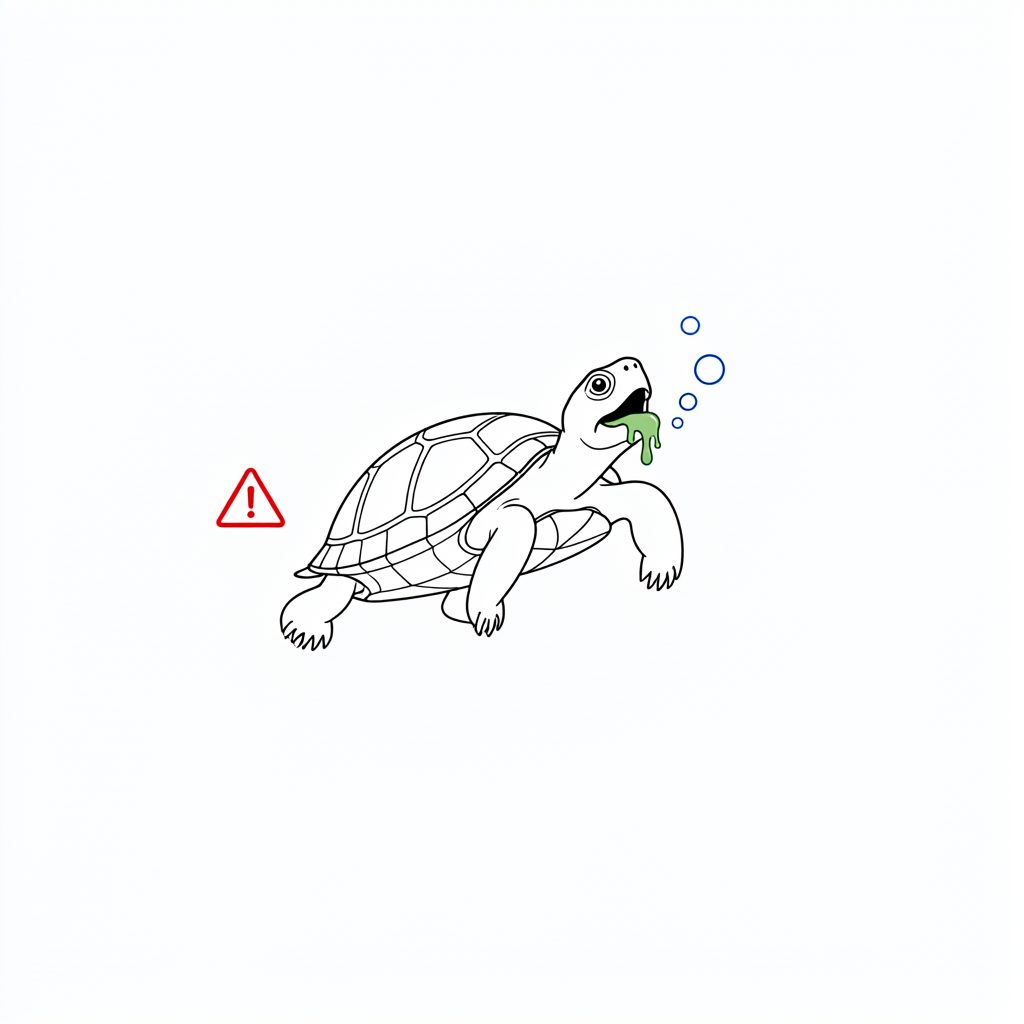
🔴 Pneumonia (open-mouth/nasal foam/side float)PneumoniaCold/Pneumonia

Severity levels

🟢 Observable: environment OK, occasional, active → adjust & observe 1-2 days 🟡 Adjust environment soon: suspected temp swing/water/diet → fix + daily log 🟠 Contact reptile vet: persistent/worsening, infection suspected → book exotic clinic 🔴 Urgent vet (ER): see below → send to pro animal hospital now
🔴 Direct referral signs (no repeated home treatment): breathing difficulty / persistent open-mouth / side float + nasal foam; severe trauma internal bleeding; obvious weakness long coma sinking; persistent abnormal float can't sink; severe eye issue (won't open + curd + odor); any case you can't gauge severity and feel anxious.
General "sick bay": matured water + shallow over shell + constant 30℃ + isolate + no food during treatment.
7

Hibernation safety gate

User mentions "hibernation", forbid giving steps directly, pass the gate first: species → hibernation need → age/health → gut-clear progress → environment controllable → vet eval if needed.

① Identify species (unknown → confirm first) ② Does this species naturally hibernate? (most aquatic/semi-aquatic yes; most tortoises no) ③ Age/health? Hatchling/old/weak/sick/no habit → heated overwinter, forbid natural hibernation ④ Gut clear: <25℃ reduce food; <20℃ stop to empty feces, prevent low-temp enteritis ⑤ Environment controllable (quiet dark, rodent-proof, monitorable)? ⑥ Vet eval if needed → Pass gives plan; fail clearly "heated overwinter this year"
Hibernation plan (only after gate passed): shallow water water ≤1× shell height, observe weekly keep level; moss/soil 20-30cm cover, keep moist, check every 1-2 weeks. Best 5-10℃, <0℃ may harm. North ~early Oct, South ~late Oct prep.
8

Human–turtle hygiene safety

Not "optional tip", but a formal safety module (per CDC).

Core fact: pet turtles, even looking healthy/clean, may carry Salmonella; turtle, tank, equipment, environment can all be contamination sources. Wash hands after contact; don't clean turtle equipment in kitchen/food areas. CDC still handling outbreaks in 2026.
□ Wash hands after contact □ Wash after tank cleaning □ No kissing turtle □ Keep turtle out of kitchen/table □ Separate turtle tools from human tools □ No turtle on kitchen counter
⚠️ Don't write the US "under-4-inch turtle sale ban" as a global rule — it's US regulation. Children, elderly, immunocompromised need stricter handwashing after contact.
9

Advanced play

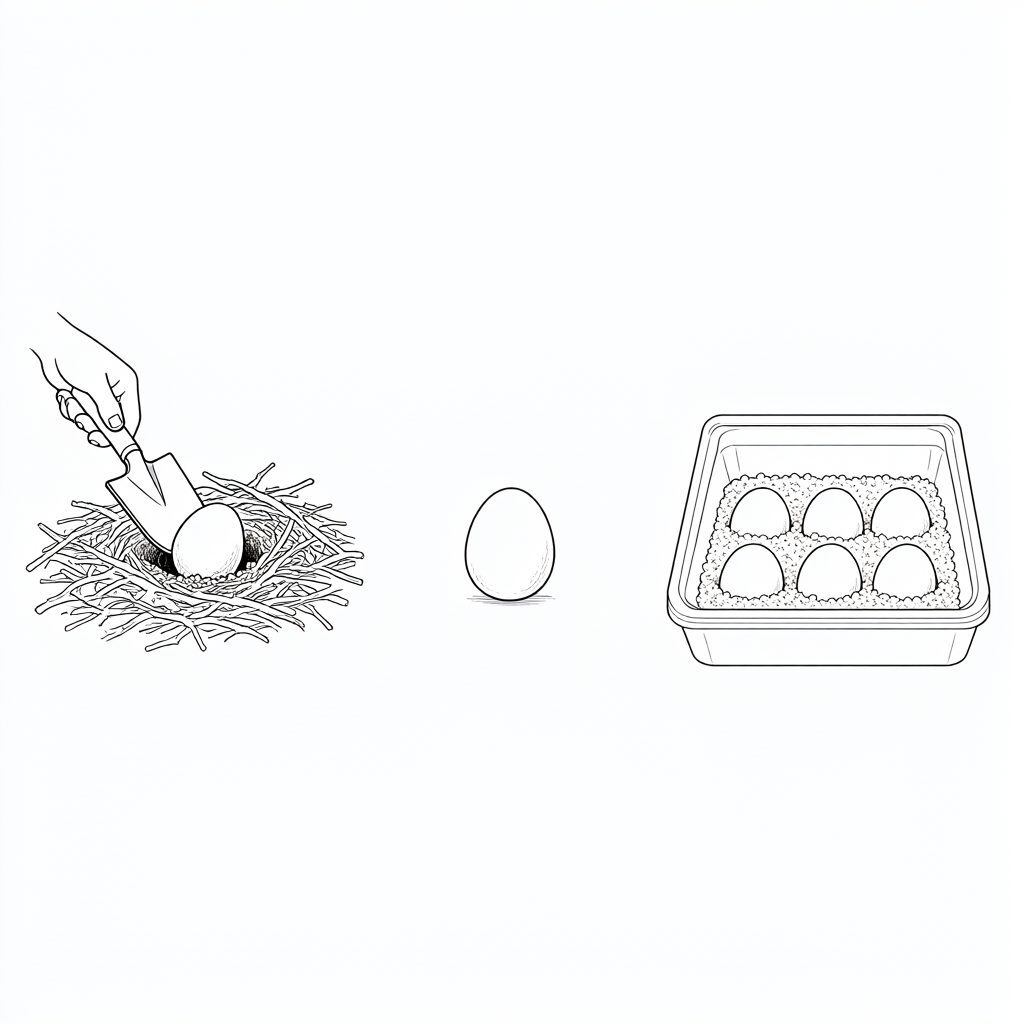
Egg digging and incubator
Fig D1 · Egg digging + vermiculite incubator (space eggs, mark dig date)
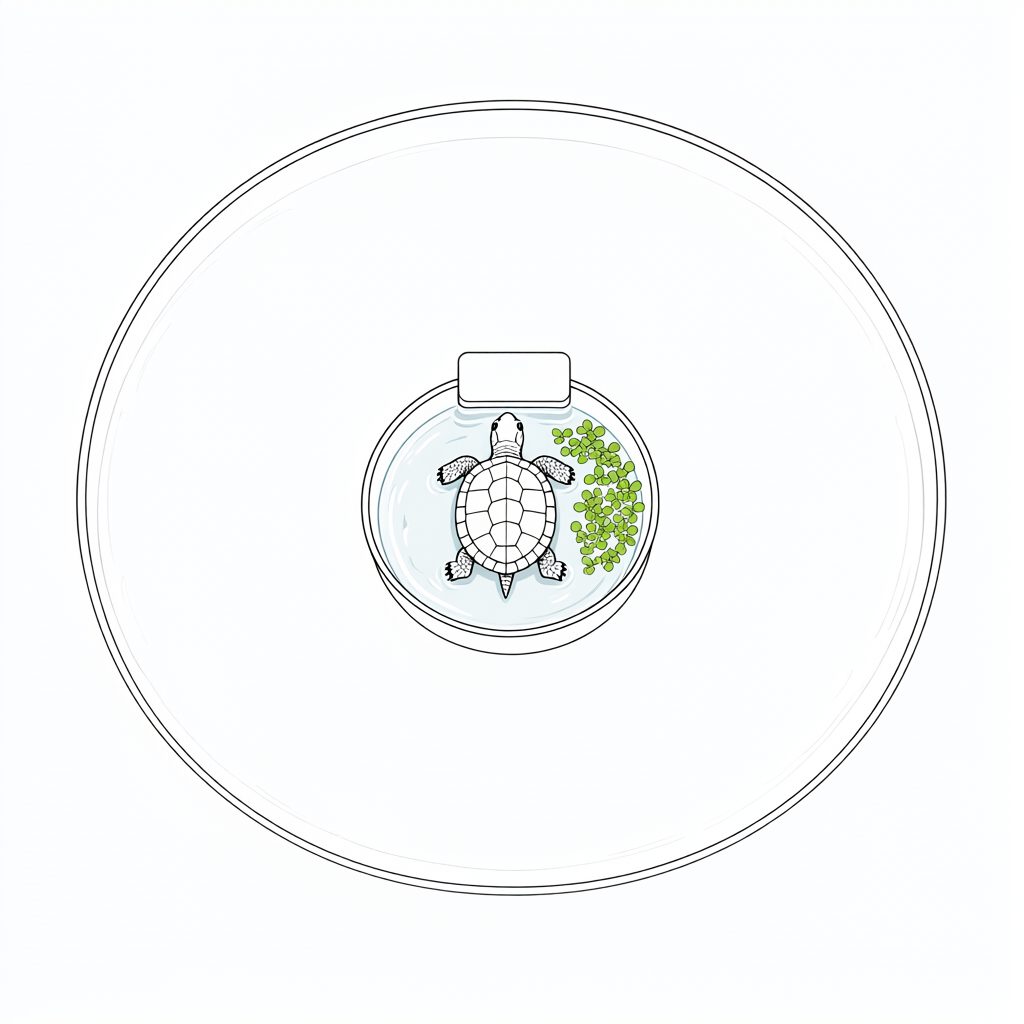
Hatchling nursery
Fig D2 · Nursery: shallow over shell, duckweed hiding, feed after stable temp
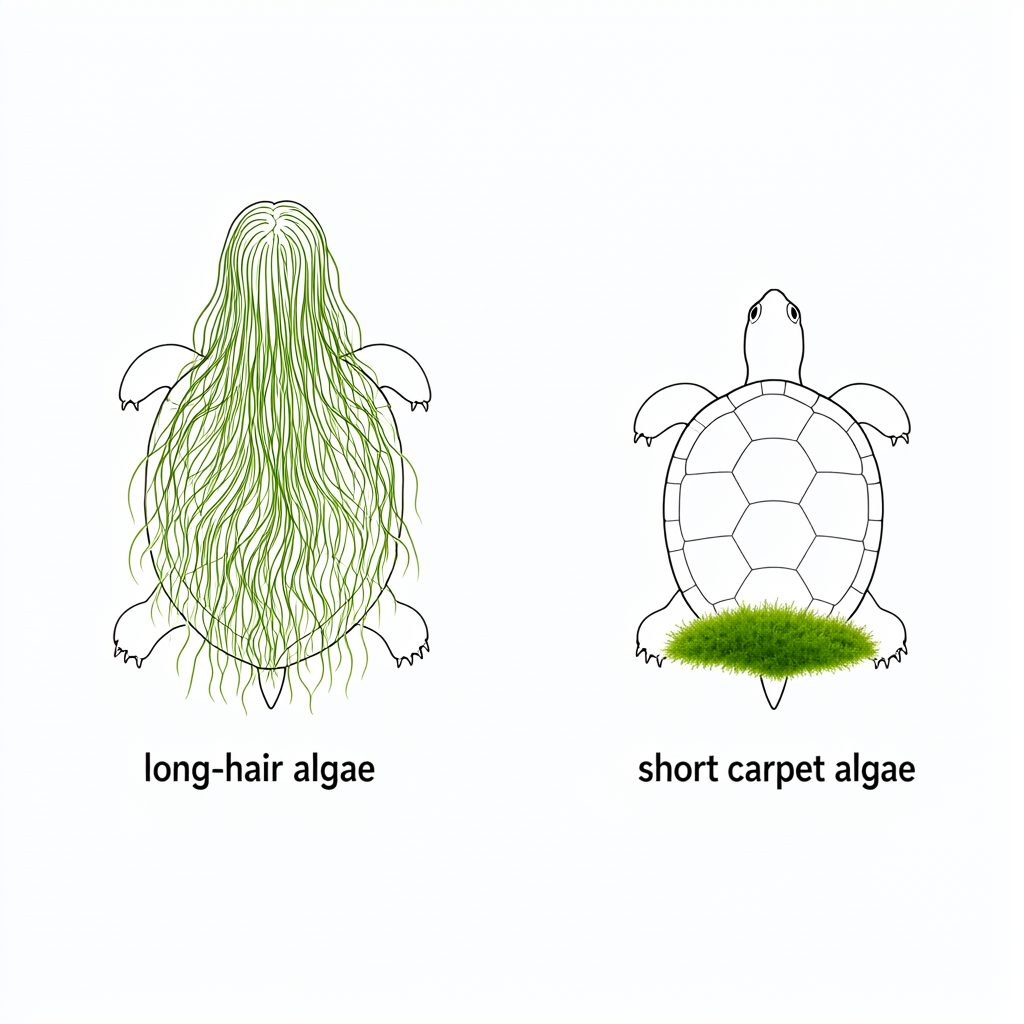
Green-hair turtle
Fig E1 · Green-hair turtle (long hair algae / short velvet carpet)
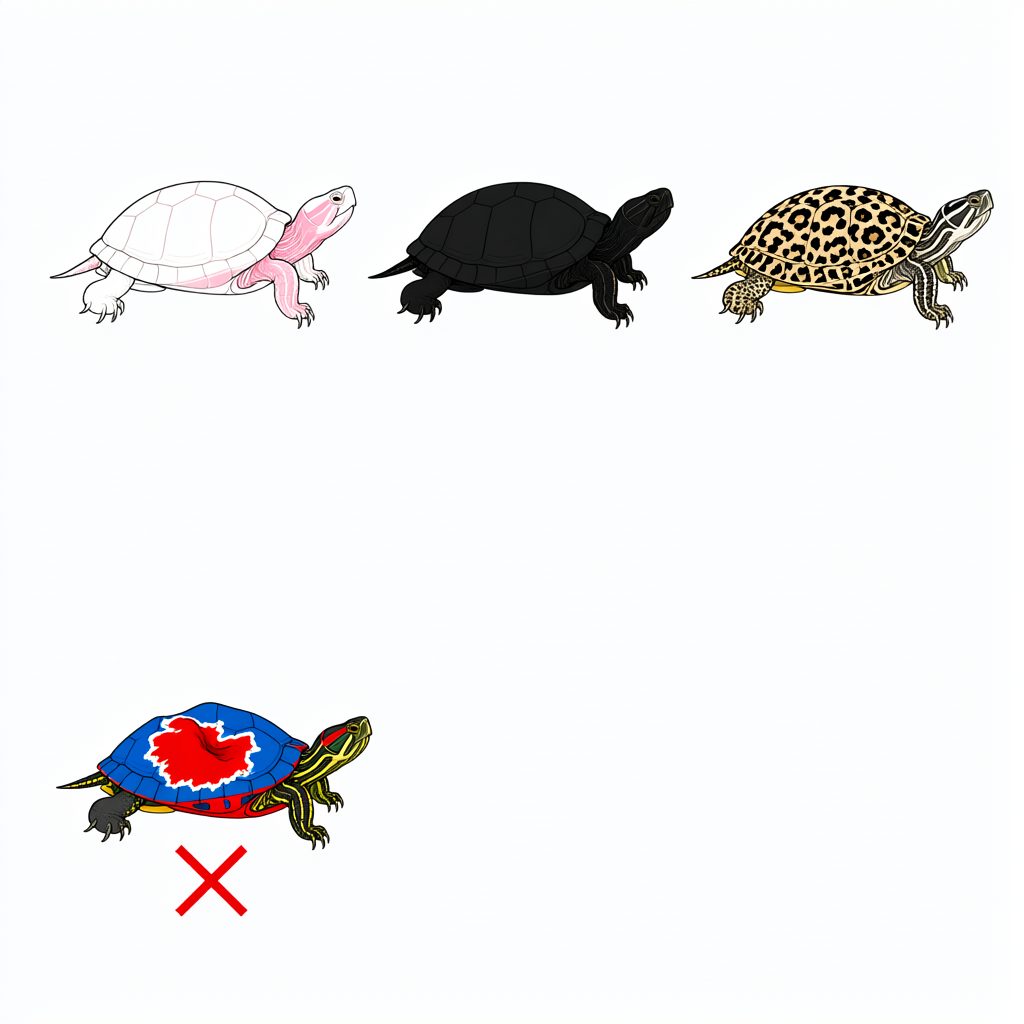
Mutations vs painted turtles
Fig E2 · Mutation types vs roadside painted turtles (sticker hurts shell, don't buy)
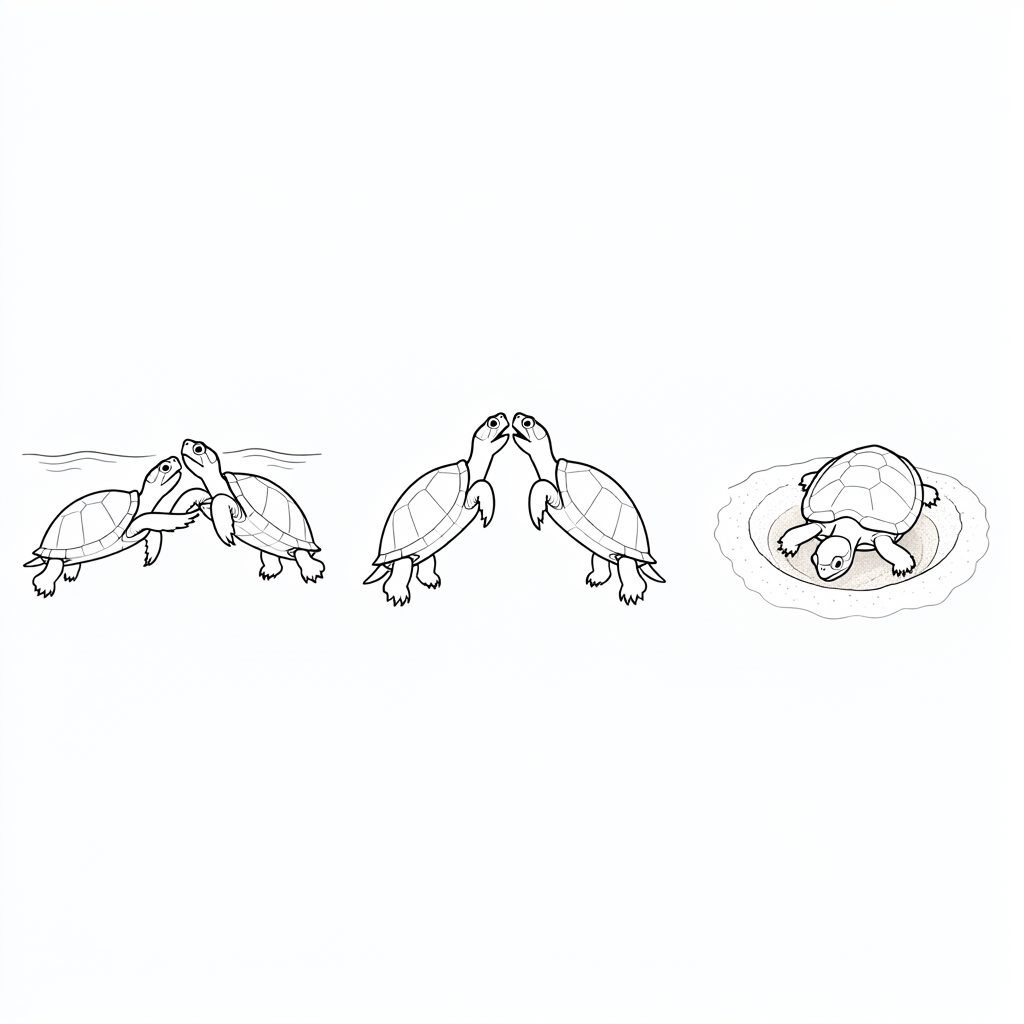
Turtle behaviors
Fig F1 · Behavior: courtship dance / duel / female digging to nest
10

Daily turtle butler

More valuable than one-off Q&A: turn advisor into ongoing butler.

Every day

☀ 08:00 Turn on UVB/basking lamp 🍚 12:00 Feed today? 🌡 18:00 Log temperature 🐢 20:00 Observe activity

Every week

📊 Weight 📊 Shell length 📊 Eating 📊 Poop 📊 Activity 📊 Environment params
Agent may find: "activity dropped for 3 weeks while water temp ~3℃ below set — check environment first, not assume sickness."
11

Core creed (10 lines)

1. Raise turtle, raise water first; old water is the treasure.
2. Temperature is the root; warm water, happy turtle.
3. Change half the water; don't change too often.
4. Feed by season; only seven-tenths full.
5. Turtles love sun; don't bake them.
6. Big temp swings in spring/autumn; out of water catches cold.
7. New turtle: isolate first, acclimate temp, quarantine, then mix.
8. Sick turtle to sick bay: 30℃ constant, shallow over shell, isolate, no food.
9. Clear gut before hibernation; guard rodents during; interrupt & heat if abnormal.
10. Less fuss, more observe; patience keeps turtle to old age.
12

Turtle-circle slang glossary

Source / Breeding

  • WC wild-caught, never buy
  • CH wild-caught with eggs, human-hatched F1
  • CB fully captive-bred, buy from this gen
  • Pond-raised / greenhouse / greenhouse-to-pond / cold-water

Quality / Age

  • 通货 common stock · 全品 flawless · 严选 premium
  • 龟苗 hatchling · 头苗/尾苗 early/late batch · 弱苗/僵苗 weak/stunted
  • 压成体 size-suppressed adult · 种龟/稳产 breeder

Appearance flaws

  • 错甲 scute misalignment · 翘边 lifted margin
  • 断尾/缺指 broken tail / missing toe · 歪龙骨 crooked keel
  • 换甲/烂甲 normal shed / rotten shell

Status / Breeding / Trade

  • 开食/拒食/填食 eating/refusing/hand-fed · 生长纹/发色/变异 growth rings/color/mutation
  • 白蛋/水蛋 infertile · 受精斑 fertilization spot
  • 随缘出/仅自提 "sell when fate"/pickup only — beware low-price talk, use platform
⚠️ "Sell when fate"/"pickup only" at low price = beware; use platform, see pitfall chapter.